Last updated XXVII MARTIUS 2024
Margot Arnold + Albert A. Bell Jr. + Kenneth Benton + John Blackburn + Gillian Bradshaw + L. Sprague de Camp + Susanne Cho + Julius Cicatrix and Martin Rowson + Lindsey Davis + David Drake + Ricardo Vigueras Fernández + Margaret Frazer + Jonathan Gash + Gisbert Haefs + Lyn Hamilton + Robert Harris + John Hersey + Tom Holland + Thomas Holt + Benita Kane Jaro + Patrick Larkin + Isabelle Lawrence + Helen Lovatt + Colleen McCullough + Assaph Mehr + Andreas Möhn + Jean-Pierre Nèraudau + Ellis Peters + Mary Reed and Eric Mayer + John Maddox Roberts + Steven Saylor + S.P. Somtow + Marcus Tullius Cicero + Harry Turtledove + John and Esther Wagner + K.D. Wentworth + Leslie Turner White + Henry Winterfeld + David Wishart
Items Not Tied to Any Particular Author
Margot Arnold
- The Catacomb Conspiracy
(New York: Foul Play Press, 1993, paperback). Rome's Via Appia Antica – the Old Appian Way – is the setting for this mystery novel set amongst the stylish villas and ancient catacombs and burial chambers of modern Rome. [ORDER] - Villa on the Palatine
(New York: Berkley Publishing Group, 1978). [ORDER]

|
The Corpus Conundrum
(USA: Ingalls Publishing Group, forthcoming November 2011). Pliny the Younger stumbles on a body while out on a hunt. The next day he discovers it has been stolen. He and Tacitus race to discover who is behind what becomes a string of murders. This is a mash-up of a Roman mystery with a vampire story. A complimentary copy was provided to this site. [not yet rated] |
- Death on the Appian Way
(London: Chatto and Windus, 1976). Novel in the form of memoirs by M. Caelius Rufus. Catullus and Clodia appear, among others. The narrative leads to the murder of Clodius and ends with a remarkable twist in the plot which adds to it an element of a detective story [ORDER]
- The Flame and the Wind
(London: Jonathan Cape, 1967) features young Sextus Marcellus Ennius and his friend Eros Dion of the Vigiles who travel to Judea to discover the truth of the life of Jesus-bar-Joseph as part of a dying bequest. Set in 30 A.D. Pontius Pilate, St. Stephen, St. Paul, the daughter of Judas Iscariot and Caligula appear.
- Render Unto Caesar
(Forge, 2003) is set in the Rome of 16 BC. Hermogenes is a Greek trader seeking justice in a commercial matter. A former female gladiator is part of the story. Seems to more a thriller than a true detective novel. [ORDER]
- Lest Darkness Fall,
(New York: Baen Books, 1996) is a very amusing and engrossing time travel saga about one man's trip to the Ancient Rome of the Ostrogoths, his attempts to educate the "Romans" and right ancient wrongs. Fortunately newly-republished. [ORDER]
|
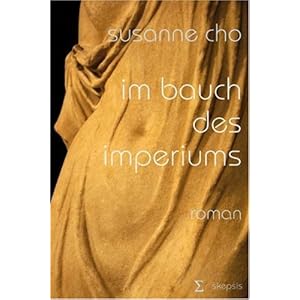
Im Bauch des Imperiums
(Switzerland: Skepsis, 2009) This German-language thriller is set in AD 67, the time of Nero. Ruma, a spice merchant from Petra, must stop a terrorist attack on the emperor and his religious sect. Some events also transpire in the province of Judea. [not yet rated] [AMAZON.DE] |
|
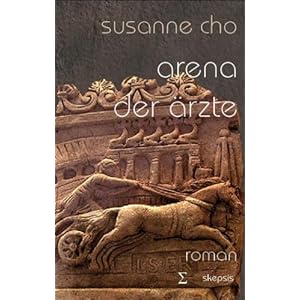
Arena der Ärzte
(Switzerland: Skepsis, 2011) German-language tale of Rome in the second century AD. Charis, a doctor and granddaughter of the character in Im Bauch des Imperiums, discovers she has a curse upon her, in the form of a curse tablet. Someone wants her dead. She flees Rome in panic, visiting Carthage, Tripoli, Pergamum, Ephesus and the Black Sea, the curse ever in pursuit. Said to straddle a divide between thriller and cultural critique. 384 pages. [not yet rated] [AMAZON.DE] |
- Imperial Exits
(New York: St. Martin's Press, 1995) In the True Crime category, by Julius Cicatrix and Martin Rowson, a hilarious look at the demises of 21 different Roman emperors. [ORDER]
- "Abstain from Beans"
is a short story set in Magna Graecia (Croton in southern Italy) in the sixth century BC which is based on the historical murder of Pythagoras (who as well as being a famous geometer ran a strange philosophical school, one of whose tenets was that one should not eat beans due to the slight resemblance of the shape of broad beans to the unborn fetus). The lead protagonist is the historical Milo of Croton. See the anthology Perfectly Criminal (US edition). - Age of Treason.
A movie by this name based on the Marcus Didius Falco character created by Lindsey Davis was filmed in 1993. Bryan Brown stars as Falco along with costars Amanda Pays, Ian McNeice and Anthony Valentine The pilot is said to show up fairly regularly on the Sky Movie Network in the UK. It has also been shown on the Encore Mystery channel, available on Primestar and DSS satellite networks. See her official website to get the author's opinion of the program. By the way, here is a list of at least 67 Roman-themed films at the Internet Movie Database. See also The Ancient World in the Cinema: Revised and Expanded Edition by Jon Solomon. - The Course of Honour
(London: Century, Random House UK Limited, 1996, hardcover, London: Arrow (Random House), 1998, paperback, paperboards; in German as Die Gefährtin des Kaisers) by Lindsey Davis chronicles the life of the Emperor Vespasian and his love affair with the slave girl Caenis. This book has appeared in German translation as Die Gefährtin des Kaisers (Frankfurt: Eichborn, 1998) and has been published in the USA as The Course of Honor in hardcover (New York: Mysterious Press, 1998), paperback (New York: Mysterious Press, 2003). - The descent to Avernus, with ticket office
(Sherborne: Classical Association, 1998. 17 pages) is the text of Lindsey Davis' presidential address to the British Classical Association. - "A Funny Thing Happened on the Road to Benghazi"
appeared in the Winter 1997-98 issue of the British magazine A Shot in the Dark (no. 14), recounting her research trip to Libya in connection with Two for the Lions. Note that the editor of this magazine, now called Shots, has a web page.
- Vettius and His Friends
(New York: Baen Books, 1989) by David Drake is a collection of twelve short stories set in the fourth century AD, most of which have an element of mystery, but also mix in science-fiction and fantasy. [ORDER]
- Breve Introduccion a la novela policiaca latina
This critical study of the Roman detective novel in Spanish [English title: Brief Introduction to the Roman detective novel (online PDF)] in 162 pages takes a welcome look at the phenomenon as well as a deep dive into the classical underpinnings and symbology of three of these novels (by Steven Saylor, John Maddox Roberts and Joaquín Borrell). One tends to read these novels as light entertainments with a smattering of learning, but this book shows that the authors have actually embeddded quite a bit of careful and interesting detail that can be appreciated if we but know how to look. I would like to thank the author for including prominent mention and praise for my website on the topic at hismyst dot org, where this book will shortly be available in free English translation. Some publisher should definitely bring this out in an English edition.
- "That Same Pit",
Shakespearean Detectives
A wealthy friend of Shakespeare asks him to adapt his play Titus Andronicus in order to catch out a murderer. As this play is not very historical in the first place, it is probably not much of a loss that this story is not in any way set during the Roman time period.
-
Gold by Gemini
is a mystery recounting a fictional hunt for Roman coins on
the Isle of Man. American title:
Gold from Gemini
- Paid and Loving Eyes is a fictional mystery concerning the famous Roman glass masterpiece, the Portland Vase. [ORDER USA] [LARGE TEXT EDITION]
- September 20th, 2001 marked the 25th anniversary of the premiere of the filmed version of a most delightful Roman mystery, the famous I, Claudius ( DVD). Where is the mystery? Genius author Robert Graves' two wonderful books I, Claudius: From the Autobiography of Tiberius Claudius, Born 10 B.C., Murdered and Deified A.D. 54 and Claudius the God and His Wife Messalina, delve into the puzzle of how a young scion of the Imperial family manages to survive while all about him his peers suffer unnatural deaths. Moreover, though regarded by historians as probably mad, how did he manage to become emperor and conduct a reign that actually seems to have accomplished quite a lot? (UK: first volume, second volume, combined volume, first video, second video) (Germany: combined volume)
- Roma: der erste Tod des Marc Aurel
(München: Diana, 2002, hardcover; Heyne Hörbuch, 2002, cassette; Heyne Hörbuch, 2002, compact disc).
Emperor Marcus Aurelius is endangered by dark political machinations. A young actress and her friend, a youthful thief, become involved in this intrigue.
- The Maltese Goddess: An Archaeological Mystery
(New York: Berkley, 1998), is set in modern times. The death of an architect on Malta reveals that a house has a troubled past that stretches back to the Roman world. [ORDER]
- Imperium
(Simon & Schuster, 2006), is the story of Cicero's prosecution of Verres, corrupt governor of Sicily as well as his journey up the cursus honorum from aedile to praetor to consul. Tiro, Pompey, Caesar, Hortensius, Varro, Terentia, Quintus Tullius and other notables appear. First in the series. [ORDER] - Conspirata (UK title: Lustrum)
(Simon & Schuster, 2010), is the story of how Cicero became consul of Rome, dealt with the Catiline conspiracy and the next three years of turbulence which followed. Tiro, Pompey, Caesar, Hortensius, Varro, Terentia, Quintus Tullius, Clodius, Metellus Celer and other notables appear. Second in the series. [ORDER] - Dictator
(Knopf, 2016), is the story of how Cicero tries to save the Republic after Caesar marches on Rome. Tiro, Pompey, Caesar, Varro, Terentia, Quintus Tullius, Clodius, Clodia and other notables appear. Third in the series. [ORDER]
- The Conspiracy
(New York: Knopf, 1972), while not a traditional mystery novel, depicts the efforts of Emperor Nero's secret service to track down dissenters. Seneca, Lucan and Tigellinus featured. [ORDER]
- Attis
(London: Allison & Busby, 1995). Catullus (the poet) is confronted with mysterious events, including a headless corpse found floating in the water, when he meets Clodia and her circle. Her brother Clodius, Pompey and Julius Caesar also appear, but all the settings are either modern or nearly so. Wraparound cover features The Introduction of the Cult of Cybele at Rome by Andrea Mantegna.
- A Song for Nero
(London: Little Brown, 2004), is a farcical novel in which a lookalike dies in Nero's place while he goes incognito to pursue his first love, music, and gets into a lot of uncomfortable adventures as a result.
- Betray the Night
(Bolchazy-Carducci Publishers, 2009), is the story of Ovid's wife, here named Pinaria, who, reeling from the exile of her husband, investigates the reasons and discovers much more. This novel is discussed in Two thousand years of solitude: exile after Ovid, which includes a Helen Lovatt essay, "The Mystery of Ovid's Exile: Ovid and the Roman detectives". [ORDER]
- The Tribune
(Signet, 2003, hardcover) seems to be more a thriller than a mystery in which a foot solder travels to Judea and meets both Germanicus and the Christ.
- The Theft of the Golden Ring / a Tale of Rome and Treasure
(Indianapolis: Bobbs-Merrill, 1948) is an adventure story which contains some elements of mystery. Set in the time of Cicero's consulship, the heroes are the father, mother and uncle of the infant Octavian (Caesar Augustus). Julius Caesar, Pompeia, Julia, Catilina, Cicero, Lentulus and Manlius also appear. Juvenile. It is actually a sequel to the Lawrence book The Gift of the Golden Cup / a Tale of Rome and Pirates (Indianapolis: Bobbs-Merrill, 1946, hardcover) which is set three years earlier and features much the same cast of characters. [ORDER]
- Two thousand years of solitude: exile after Ovid
edited by Jennifer Ingleheart (USA: Oxford University Press, 2011), a series of essays on the legacy of Ovid, includes Helen Lovatt's "The Mystery of Ovid's Exile: Ovid and the Roman detectives". The piece discusses David Wishart's Ovid and Betray the Night by Benita Kane Jaro, plus questions such as why Roman mysteries have found the popularity they have, and not least, solutions to the mystery of Ovid's sentence of exile. [ORDER]
-
The author has a fine series detailing the fall of the Roman Republic and
the rise of the Empire
in the period from Marius and Sulla to that of Antony and Cleopatra.
Here are the seven volumes in chronological order:
- Murder in Absentia
(Purple Toga Publications, 2015, Kindle edition) Felix the Fox is a hardboiled investigator, but also a magician, in a fantasy world based on Ancient Rome. Therefore he is the one to call when a Senator finds his son dead in bed, covered with strange tattoos.
- Corpus Sacrum
(Societäts-Verlag, 2006). During the reign of Antoninus Pius, the young slave Charis must move to Aquae Mattiacorum (modern Wiesbaden, Germany) at a time when there is growing unrest between the empire and the German tribes. In addition the cult of an oriental goddess is growing, bring terrorism and secret murder in its wake. Threatened both by barbarian temple agents and by a too ambitious Roman general, Charis and an aging priest must uncover a plot to seize the imperial throne before terror lays waste to their home. [AMAZON.DE]
- Les Louves du Palatin
(Paris: Les belles lettres, 1988) by Jean-Pierre Nèraudau is a fictional memoir by the wife of Gaius Julius Caesar.
- City of Gold and Shadows
(London: Headline Books, 1973, hardcover; London: Headline Books, 1989, paperback; London: Headline Books, 1991, audio tape; New York: William Morrow & Co., 1974, paperback; New York: Ulverscroft Large Print Books, 1979, large text edition; by Ellis Peters (pseudonym of Edith Pargeter) is a modern-day mystery set at a fictional Roman site based on Roman Uriconium (Wroxeter).
Mystery novels set in the Byzantine court and era.
-
One For Sorrow
(New York: Poisoned Pen Press, 1999, hardcover; New York: Poisoned Pen Press, 2000, paperback).
John investigates the death of the keeper of the Imperial Plate amid a bounty of suspects including a stylite, a soothsayer, a British knight, an Egyptian brothel keeper and two ladies from Crete. First in the series. [not yet rated] -
Two For Joy
(New York: Poisoned Pen Press, 2000, hardcover; New York: Poisoned Pen Press, 2001, paperback).
Two years later, John investigates the spontaneous combustion of holy men sitting high atop pillars. Second in the series. [not yet rated] -
Three For a Letter
(New York: Poisoned Pen Press, 2001, hardcover; New York: Poisoned Pen Press, 2003, paperback).
An eight-year old hostage son of the last Ostrogoth king of Rome dies at the court of Justinian. John is ordered to investigate. Third in the series. [not yet rated] -
Four for a Boy
(New York: Poisoned Pen Press, 2003, hardcover; New York: Poisoned Pen Press, 2004, trade paperback; Poisoned Pen Press, 2007, UK trade paperback).
A prequel tale set in 525, during the reign of Justin. John investigates the death of a wealthy philanthropist in the Great Church and its implications for the empire's new ruler. Fourth in the series. [not yet rated] - Five for Silver
(New York: Poisoned Pen Press, 2004, hardcover; New York: Poisoned Pen Press, 2004, paperback).
John investigates the death of his servant's friend during the plague year of 542. Fifth in the series. [not yet rated] - Six for Gold
(New York: Poisoned Pen Press, 2005, hardcover; New York: Poisoned Pen Press, 2005, large print paperback).
Despite accusations that he murdered a senator in the Hippodrome, John's ventures to Egypt to discover why sheep are cutting their own throats. Meanwhile John's friend Anatolius is at work helping with the former problem. Sixth in the series. [not yet rated] - Seven For a Secret
(New York: Poisoned Pen Press, 2008, hardcover).
John stays home in Constantinople only to become involved in dangerous intrigue. Seventh in the series. [not yet rated]
- The German production company Zum Goldenen Lamm have acquired film and television rights for the SPQR series. More information is available at their site. Or see an auto-translated English version.
- "The Eagle and the Rabbit"
is a Roman-era short story in the anthology
Warriors
(USA: Tor Books, 2010). It does not include Gordianus, but is set much earlier, in 146 BC, the year of the final surrender of Carthage. Roman slave traders are looking for Punic survivors. The story is full of homoerotic overtones, but does not to have much point. Gordianus fans will probably not find it worth the journey.
The same volume also includes "The Triumph" by Robin Hobb set during the first Punic war. It recounts the experiences of the captured Roman consul Marcus Atilius Regulus and his best friend, but also brings in fantasy elements such as a dragon. This story works better if one can swallow the fantasy portions. - In San Francisco, California, Steven Saylor gave a talk titled "Bringing the Late Republic to Life (and Putting It to Death)" at SFSU Humanities Auditorium (HUM 133), Thursday, March 29. San Francisco State University.
-
Mystery Readers Journal,
Summer 1993, (volume 9 No. 2, History Mystery, Part I) "All Roads Led to Rome" by Steven Saylor explains how the noted author got into the field. An excerpt of the article is on-line. - "Murder Myth-Begotten" is a Steven Saylor modern take on ancient Greek mythologies in Ellery Queen's Mystery Magazine, April 1996.
- "A Murder, Now and Then..."
is an introduction written by Steven Saylor for Classical Whodunnits (London: Robinson, 1996; edited by Mike Ashley). - "A Novel Approach"
is an essay by Steven Saylor appearing in Prospects (the newsletter of the National Committee for Latin and Greek) Winter 1995. -
"On Writing the Historical Mystery"
is an essay by Steven Saylor appearing in The American Classical League Newsletter, Fall 1995 (volume 18, No. 1). -
The Silver Chariot Killer,
(New York: St. Martin's Press, 1996, hardcover) a mystery novel by Richard Lupoff, contains an introduction written by Steven Saylor. [ORDER] -
"Some Ramblings About Roman-Set Fiction"
is an essay by Steven Saylor appearing in Texas Classics in Action, Winter 1996 and reprinted in The Augur (newletter of the Illinois Classical Conference), May 1996. - Roma, is a Michener-esque history of Rome's first thousand years written as a series of novellas.
- Roma II is the sequel to Roma.
- Dominus
is the third in the Roma series.
This is a multi-generational epic set in reigns from Marcus Aurelius to Constantine.
The main character is a working and in-demand sculptor. It would have been exceedingly unusual for a Senator from a very old family to do any real work, especially in an artistic way. How would they even get trained to do such things? It would have been far more realistic that his clients perform such activities, to his material benefit. On the other hand it was a wise choice to posit the protagonists in the sculpting business. This provides a good excuse to constantly discuss how the various emperors want to depict themselves – which of course throws light on their characters.
It's good to see Galen, a real doctor and writer of ancient times, but the case he comes to solve is so boring and unbelievable. The family, particularly the mother, could not figure out the problem on their own?
It's an anachronism that the Pinarius patriarch wears his toga to an event. By this time, even long before, most had abandoned their togas, except for official duties.
We meet the future emperor known as Commodus, as a child. He would not have been called Commodus at this age. His full name was Lucius Aelius Aurelius Commodus and would have been called Lucius. And arriving at the rule of Commodus begets a fond wish that he will die as soon as possible.
A character hides his head among the leaves of a fig tree. The author has maybe never picked figs. The leaves of that tree are extremely irratiating to the skin. The main symptoms are burning sensation and pain, itchy erythema, and edema. I don't believe anyone would ever do this willingly.
The story becomes interesting as we explore the views of a Cynical philosopher, set side by side with a Christian, Justin Martyr, but the character is only around for a few pages.
One of the emperor's sons has died and a character pronounces the last remaining one "priceless, invaluable". But that makes no sense. The last five emperors had all been adopted and the empire had never been better, proving that a genetic heir was in no way necessary.
It's tiring to constantly read about a gold bulla that is supposed to have magical properties. More time should be spent creating three-dimensional characters instead. Although the emperors are developed, the main characters, the ones telling the story, are blanks really.
It's nice to see mention of Pertinax, one of my favorite little known emperors, but alas he got about a paragraph and then was gone. There should have been an entire chapter/story about him. This book probably bites off too much history. As a consequence of going from Aurelius all the way to Constantine, it has to leave an awful lot on the cutting room floor.
The Antonine Plague that occurs near the beginning of this book wrought huge changes in the Roman economy. In particular, throughout the provinces smallhold farmers were unable to keep their properties, which were then acquired by wealthy landowners, who then farmed them via slaves. As a consequence, the army which had drawn its soldiers from this smallholding class, was never the same again. But there's nothing about this process in this book.
Just as with Commodus, the future emperor as a child would have been called Publius rather than Geta.
The comparison of Philostratus instructing a future emperor compares them to Plato and Alexander the Great, but it should be to Aristotle to Alexander. Aristotle was his teacher, not Plato.
Developing strong doubts about the book's raison d'etre. It's just a very minimal gloss on actual history. What's added are the author's personal takes on the emperors – which anyone can do – and the made-up characters, who are just uninteresting ciphers. I would much prefer to just read actual nonfiction history. A good one is called The Chronicle of the Roman Emperors.
On p. 335 a character named Gnaeus is suddenly called Gaius. This is a simple slip, but there is a problem with the given names. In ancient Rome there were for the most part only seven possible given names and each family tended to give the same given name generation after generation. But here they choose a different one of the seven names in each generation. A missed opportunity to teach readers something about Roman culture.
The period of this book is when the Christian religion was developing in Rome, but we hear almost nothing about it. Nothing about them hanging out in catacombs, the early popes or anything like that. Really seems another missed opportunity.
Aurelian describes his walls as complete, but in reality he died before this occurred.
The fate assigned to Zenobia is dubious, having been written by a chronicler only hundreds of years later. It would be far more likely that she would have been eliminated as was the custom for Rome's enemies in those times. Even more surprisingly, we get page after page about her, even though some Roman emperors barely got a full paragraph.
It's good to see the philosopher Porphyry, however briefly, as his is a mostly forgotten name now.
After Aurelian, the book does not even bother to name all the emperors who preceded Diocletian.
Someone has written that in the second book of this series, Empire, "at the novel's heart are the choices and temptations faced by each generation of the Pinarii." I would have to say that in this book the Pinarii make very few choices. About the only one of significance is the pursuit of Zenobia.
Toward the end the frequent regurgitation of the story of the Rain Miracle really starts to pay off as we see how the story gathers "enhancements" and gets reappropriated for current needs. Thus do histories turn into legends.
The author's bibliographical note at the end is so very excellent. So many good sources that it would be interesting to follow up with!
By the way, here is a video of the author introducing the book.
Disappointing that there's no mention of the Kushan embassy that reached Rome, or of the Roman embassy that reached China.
This is a novel of particulars. Particular emperors, philosophers, characters, places, works of art and other objects, but not too much one of general cultural or historical trends, apart from huge, obvious ones like Constantine opting for Christianity. So there are limitations on my enjoyment of it, even if what it does provide tends to be interesting.
In terms of the map, the area around the Crimea was a Roman client in this period, but this is not indicated. The indications for India and China (Serica) are up in the northeast heading for Parthia, but they should really be is Egypt, heading for the Red Sea and Indian Ocean. That's how Romans got to those places.
As far as the family tree goes, by this period in Roman history, many of the Romans, especially the aristocracy, had much more complicated names, which was the inevitable outgrowth of the way that the Romans recorded adoptions in their names, as well as adding honorifics. For example, the real name of Emperor Antoninus Pius was Titus Aelius Hadrianus Antoninus Pius. It would have been educational to show that in the names for this period. I hope the writer's ideas aren't stuck in the Republican era. It's also rather unlikely in these times that a family would produce a male heir who would survive to produce a male heir and so on, even into ten generations! There were so many problems such as infertility, early death, only birthing girls, and so on. This family tree is very improbable.
-
Marlowe in Toga? - Krimis über das alte Rom "Der historische
Kriminalroman als neues Genre der Trivialliteratur am Beispiel
der "SPQR"-Romane von John Maddox Roberts"
(Germany: IFB Verlag, 2001, paperback).
The German title translates to 'Marlowe in a Toga? Mystery novels set in Ancient Rome: "The Historical Mystery Novel as a New Genre of Popular Literature, For Example the SPQR Novels of John Maddox Roberts"' and is a work that grew out of the author's master's thesis. In 132 pages it treats the works of several authors such as Lindsey Davis and Steven Saylor, but especially those of John Maddox Roberts.
- "Hunting the Lion"
appeared in the Spring 1992 issue of Weird Tales (Philadelphia, Pennsylvania, USA). Detective Publius Viridianus, master of disguise, is assigned by the Emperor's eunuch to dig up dirt on one Quintus Drusianus Otho. The madcap case comes to involve Vestal Virgins, Christians, Lions and Somtow's own version of Night of the Living Dead. Nero and Caius Petronius Arbiter appear.
- Murder Trials
(New York: Viking Press, 1975, 1990 (revisions), paperback. Translated by Michael Grant). The book contains a collection of the defenses by Cicero of various prominent figures of Rome who were accused of murder. These are the actual stories behind some of the novelized cases. [ORDER]
- "Death in Vesunna"
in Isaac Asimov's Science Fiction Magazine (January 1981) and in Departures (New York: Ballantine, 1993) by Harry Turtledove and Elaine O'Byrne. This story which mixes ancient Rome and high technology is set in Aquitania during the reign of Antoninus Pius. [ORDER]
- The Gift of Rome
(Boston, Toronto: Little, Brown & Co., 1961) by John and Esther Wagner is based on Cicero's speech Pro Cluentio "and has some of the elements of a mystery story, as the circumstances surrounding the death of the elder Oppianicus develop [...] an attractive young girl does some detective work for Cicero."
- The Imperium Game
(New York: Ballantine Books, 1994, paperback) is set in the virtual (life-size) Roman Empire, in a game in which the participants enlist for very considerable fee and then progress along the Roman social and political ladder. The Roman realia, for the most part (but with a few exceptions) are direly accurate. [ORDER]
- Scorpus the Moor
(New York: Doubleday, 1962) is about the difficulties of an Arab accused of murder in Nero's Rome.
- The Riddle of the Red Wolf. A British TV series by this name based on the book Detectives in Togas was filmed in 1958.
-
Horse Coin
(London: Hodder, 1999; hardcover; London: Flame, 2000, paperback).
In the Britain of AD 59, Marcus Julius Severinus, is promoted to be a cavalry commander, but gets into hot water with Proconsul Paulinus, precipitating Queen Boadicea's revolt. [AMAZON UK]
Items Not Tied to Any Particular Author
- Roman Mysteries By the Numbers (5/27/08)
-
Die Antike außerhalb des Hörsaals
(Münster: Lit, 2003, paperback). Edited by Kai Brodersen, this is a collection of papers about mysteries from a conference at Mannheim. An article by Rosmarie Günther, "Römische Ermittlungen" compares the works of Saylor, Roberts, Davis and Stöver. - Bouchercon: Authors John Maddox Roberts, Steven Saylor and Lindsey Davis all appeared together for the first time at Bouchercon, the World Mystery Convention in San Francisco, October 14-17, 2010.
- Crimina. Die Antike im modernen Kriminalroman
(Frankfurt am Main: Verlag Antike, 2004, hardcover).
Edited by Kai Brodersen, this is a collection of papers about mysteries set in the ancient world. Contributors include Markus Schröder, Stefan Cramme and several historians as well as the authors Hans Dieter Stöver and Malachy Hyde. All were gathered for a small colloquium at Mannheim University, where Brodersen is professor of ancient history. A list of contents and a chance to order are also available. -
Mystery Readers Journal,
Summer 1993, (volume 9 No. 2, History Mystery, Part I)
- "O Tempora! O Mores!" by Elizabeth Watson is a survey of the more popular Roman Mystery novels.
- "B.C. ★(Before Cadfael)" by Sue Feder is a comprehensive survey of mystery novels set prior to the Middle Ages including Roman Mystery novels.
- "Mystery in Retrospect: Reviews" by Carol Harper and Dean James provides capsule reviews of several of the more popular Roman Mystery novels.
- The magazine, The Mystery Review, in its Summer 1999 issue (volume 7, no. 4) features in a lead article "The Ancient World of Crime" (Part I). By retired Classics professor Barry Baldwin, the piece is a rundown of courts, criminal situations and actual crimes in Ancient Rome, Greece and Egypt. Also included is a crossword puzzle with many clues pertaining to Roman mysteries and a review, also by Baldwin, of Marilyn Todd's Wolf Whistle.
- The Winter 2000 issue of The Mystery Review issue (volume 8, no. 2) features Part III of its series on Ancient Crime, discussing various historical events in the Roman world that might make good topics for a Steven Saylor-style novel (say that three times fast?). Included: the mysterious death of the Third Punic War consul Publius Cornelius Scipio Aemilianus (a biography of him exists by the way, by Alan Astin); the death of Agrippa Postumus during the reign of Tiberius (detailed by Graves, of course); that of Germanicus during the same reign (which has been treated previously in Graves' I, Claudius and Wishart's Germanicus); the murder of Emperor Claudius (treated in Yaffe's "The Problem of the Emperor's Mushrooms"); the murder of the last pagan emperor Julian in AD 363 (treated in Gore Vidal's Julian); and the crime of passion story of Octavius and Pontia during the reign of Nero as told by Tacitus. Also included are reviews of two "One" novels: One For Sorrow and One Virgin Too Many.
- "Rinse the Blood Off My Toga" with Flavius Maximus, Private Roman Eye was an amusing sendup on television's Ed Sullivan Show of the detective genre set during an investigation of the assassination of Julius Caesar. Source of the phrase "Julie, don't go!" By Johnny Wayne and Frank Schuster. A sample script.
- "What Caesar Saw" appears in the volume 5, Number 11, November 1995 issue of Firsts, a magazine devoted to collecting first editions of modern books. The 12-page article by Robin H. Smiley surveys the more popular selections in the genre providing information about the current market values of the various first editions, photos of most of the covers and short plot descriptions. Works by Irwin, Davis, Roberts, Burns and Saylor are mentioned. A photo of Lindsey Davis is included as part of an article on Ellis Peters. Back issues are available by writing FIRSTS at P.O. Box 65166, Tucson, AZ, 85728, USA.
- Roman mystery authors Keith Heller, Edward Hoch, John Maddox Roberts, Steven Saylor and Donald Westlake appeared at Bouchercon '97, the worldwide convention of mystery in Monterey, California, October 30-November 2, 1997. The Ancient Mysteries panel was recorded on audiotape and is available for purchase – contact On Site Taping, CONFTAPE1@AOL.COM.
- In San Francisco, California, "Rome in the Year One" was presented on February 23-24, 2001 by Humanities West. Speakers included Erich Gruen and Trevor Hodge. Also, a dramatic enactment of a Roman banquet. On May 4-5, a similar program will be presented on the Silk Road, sponsored by the Silk Road Foundation. (3/11/01)
- Reviews of this site:
- ascot6361 (10/27/07)
|
Sue Feder
Prominent mystery reviewer and publisher Sue Feder died September 9, 2005 after a long illness. Historical mysteries have lost a strong champion and especially Roman-era mysteries. I first met Sue at Bouchercon in 1997 when it was held in Monterey, California. She was a member of a fascinating panel discussing the world of mystery reviewing, which at that point she had already been doing for a decade. Another panelist had just given a quite funny introduction and Sue was next. In her dry, matter of fact, New York way, she stated "I can't follow that." This brought down the house. She then did proceed to follow it, and then some. As a matter of fact I bought the tape from that seminar and still listen to it from time to time. (You can listen to her as well.) Sue was a great fan of Roman-era mysteries and evidently many other historical subjects. Once she told me about how fascinated she was with with the Beatles, another with everything Titanic. I don't know what came of that, but after I found out about her historical mysteries zine, I went to considerable trouble to look up the Murder: Past Tense issue on Roman mysteries and learned a lot there, not just about books I hadn't heard about, but also about what makes a good one. Sue liked to use the expression "overusing the oil lamp" to gently chide those mystery writers who are too intent on putting all of their research on the page, to the extent that it gets in the way of story, characters and finally, verisimilitude. The fact that Sue had revived this expression from the same one that was used in ancient times was just sublime. Sue was also the only person I ever met who had managed to track down a copy of Charles Connell's Most Delicious Poison. I tried and could only find it at the British Library who refused to let it out. But if she was a true critic who could not be bought, she was also a champion of writers and the genre itself. At Bouchercon a lot of people talked about it, but she was the one who, in 1998, actually did finally create an award specifically for historical mysteries, the Herodotus award. She used it to bring attention to writers that she thought profoundly deserving, among them Lindsey Davis, for the Lifetime Achievement Award and Steven Saylor for his Rubicon. Fortunately her writing still lives on at the Historical Mystery Appreciation Society, at least for now?, but in the Historical Mysteries world, Sue Feder is one extra special fan and good person who will sorely be missed. |
|
Donald Westlake
Noted mystery author Donald Westlake died December 31, 2008. The relevance to the world of Roman mysteries is that this author was a proponent of bringing Steven Saylor's 1992 novel, Arms of Nemesis to the big screen. When this site spoke with him in 1997, he reported that he had already completed eleven drafts on the script. (Maybe if Hollywood spent less time re-writing perfectly good novels and more time filming there would be something to see by now.) He also reported that in writing his own novels he never used outlines. "If I've written an outline," he said, "then the book is already done". Besides all of his great stories over the years, including work on the great film The Grifters, he also made an outstanding special contribution in Murderous Schemes, which offers a complete taxonomy of all of the different forms of mystery stories and then impressively offers a story of each type. (1/2) |
